
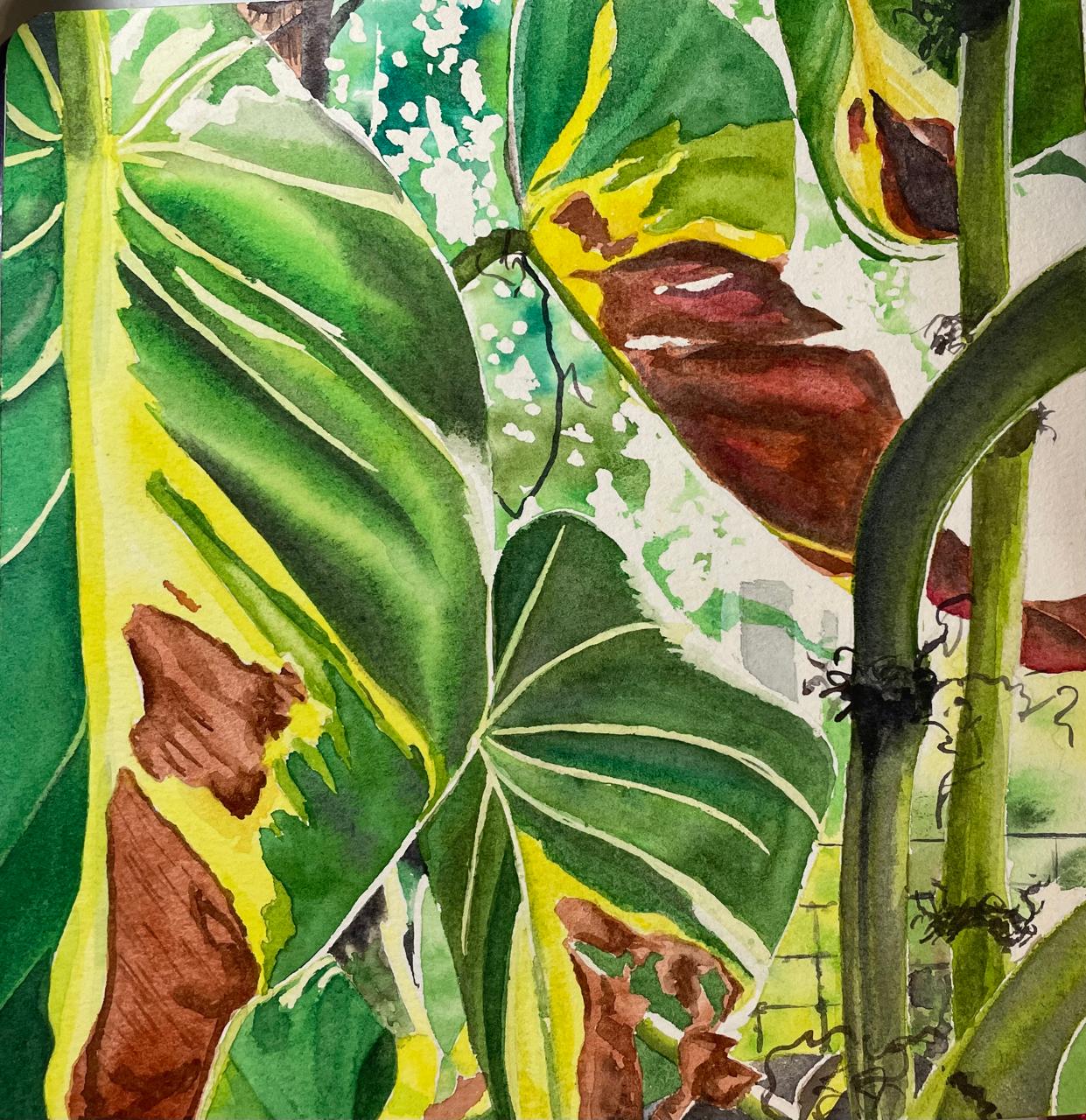
These days when I sit in the home we have created in India, I have mixed feelings. Love is the first and strongest feeling. I love this home—it has become our nest, the nest from which we have launched our children.
For many years, we had yellow weaver birds who would build complicated, one or two-storied nests using the lemon grass growing nearby. According to the books, the male birds build a nest in hopes of gaining the approval of a discerning female. With an appraising eye, she looks at the nest and determines the potential of the eagerly awaiting male, still sweating from all his hard work.
My brilliant, gardener husband, a farmer through and through, built an amazing nest for us. Let me explain a bit so you can visualize things better. Farming for South Indians doesn’t look like fields of grain flowing over the rolling hills, like in Pennsylvania where I’m from. Farming goes upward in South India. Farmers grow tall beetle nut trees, rubber trees, coconut trees, and banana trees. Crops such as black pepper grow up the trees. To look at the harvest, you must crane your neck upward.
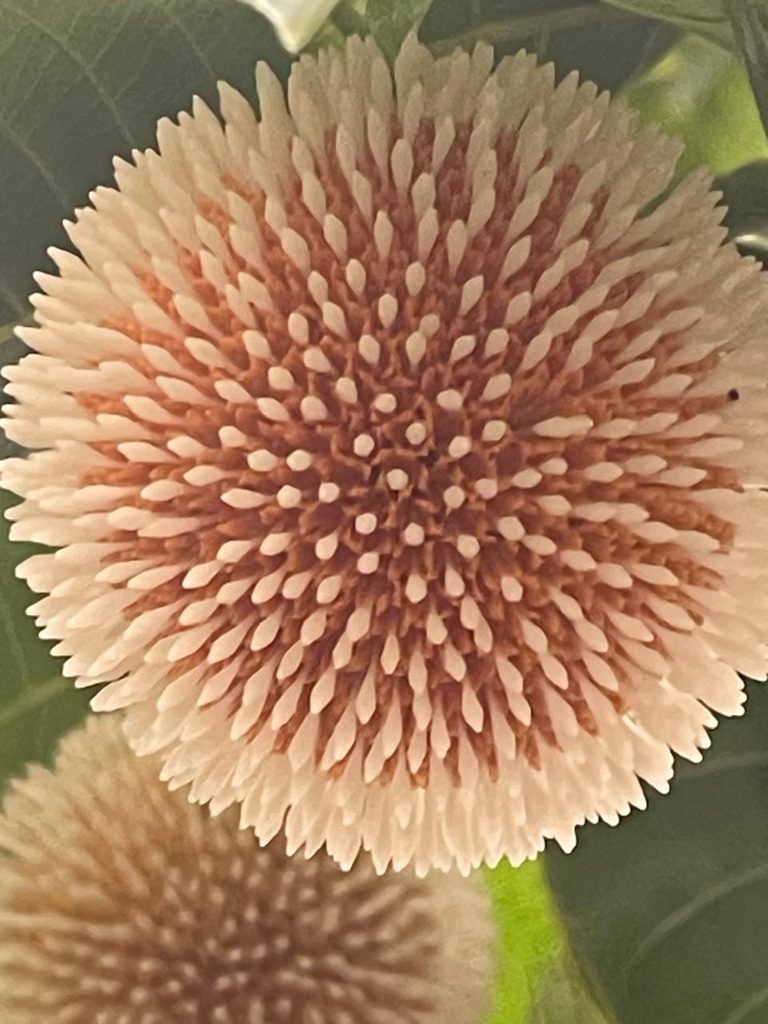
Jose has done the same thing around our house. First of all, don’t picture an American-sized yard. Our plot holds our bungalow with a 10-foot-wide perimeter of garden space around all four sides. Within this space, we have a whole lot of trees: two mango trees, a lemon tree, a jackfruit tree, an ornamental orange tree, a bread fruit tree, a drumstick tree, a star fruit tree, a gooseberry tree, 2 coconut trees, and a tree with flowers that look like something Dr. Suess would have dreamed up. We were so surprised the first time it bloomed!
Yes, all the roots of these trees are indeed very bad for the boundary wall, which just fell over. Our plot bursts at the seams, but within, our house is like a cozy nest. One of our boys commented that our house looks like it is playing hide and seek because you can barely see the house through all the trees.
I love this house because within this nest of tropical green, I have been very safe. In fact, maybe too safe.
Or…choosing a kind response to myself… maybe the amount of safety was just what I needed when pain drove me into a season of isolation. Again, you must not picture actual isolation—in India and with a large family, you are never alone much. I felt isolated because I was alone with my pain and could barely leave the house. (Conveniently for me, this time coincided with Covid, which meant the best thing to do was to stay at home.) In my worst times, I felt I could only manage my pain when I was alone in my office. My world had become very small. I found myself expressing to a wise friend that I didn’t want to go out of the house at all, in fact, I only felt safe in my office. I only felt a decrease in pain when I lay on a yoga mat and did some relaxation exercises all alone, in silence. At that point, I worried that I would never feel able to leave the house again. Would I ever actually want to do anything? Everywhere I could go, I had to carry my body, and my body was the source of pain. My body didn’t feel safe. At least at home I could manage things okay.
Thank God that a shift has taken place. Over the 5 years of practicing the activities and mindsets described in this blog (nervous system regulation, sensory awareness, Christan meditation, breathwork), I’m opening to life again.
Now, surprisingly to me, my second strongest feeling about my house is that I want to leave it! I’m anxious to step into the changes ahead for us. I want to get out of the house! I’m even willing to move out of this house, close it down, and live somewhere else. I don’t want to be all alone anymore.
The difference in these mindsets is embodiment. Through learning to accept my body and physical status and to experience my body in a new way, I feel more at home in my body. The longer I practice God’s presence, the more I feel safe, right here, right now. For people struggling with chronic pain, you can understand the profundity of this. Yes, I still have pain, and I would love for that to continue to decrease, but I’m not as scared of it as I used to be. I understand it and know how to come back to a calm place when my anxiety ramps up. In this calmness, I find God, who lives in this body with me.
Spiritually, these changes come as I have shifted from understanding “God out there” compared to “God in here.” He is inside me, not far away. Some of our worship songs encourage a mindset of needing to go toward God, who seems to be a long way off, to find safety. I think of one I sang in my youth: “The Name of the Lord is a Strong Tower.” Do you remember how it goes? “The righteous run into it, and they are safe!”
One who dwells in the shelter of the Most High Will lodge in the shadow of the Almighty.
I will say to the LORD, “My refuge and my fortress, My God, in whom I trust!”
Psalm 91:1-2
We can picture medieval castles that provided refuge when the barbarian hoards attacked. These images are not wrong per say. However, they encourage the mindset that we have to go somewhere else to find God. There, in the shadow of his wings, we must hide and stay sheltered to be safe. This changes when God no longer seems distant, when we find him living inside us, inside our bodies. What if the song went: “The name of the Lord is a strong tower. He is here right now! Let’s pause in silence and stay in his safe presence.”[i] What if running to God is settling into our bodies and grounding ourselves in the present moment?
“Do you not know that you are God’s temple and that God’s Spirit dwells in you?”
1 Corinthians 3:16
For those of us in pain, all we want to do is escape our bodies. Will our bodies ever feel like a safe home? It is hard to imagine God wanting to make his home inside us and our messy life situations.
As I bring this post to an end, I just invite you to consider what it would take for your body to feel like the safe place? Does God feel far away like a star in a distant galaxy? What if your painful body was a place He longed to dwell?
[i] A good place to start practicing feeling safe in your body is through breathwork. See this post: The Consolation Prize


0 Comments